
AI Tinkerers Afghanistan
AI Tinkerers: A Global Community for AI Builders
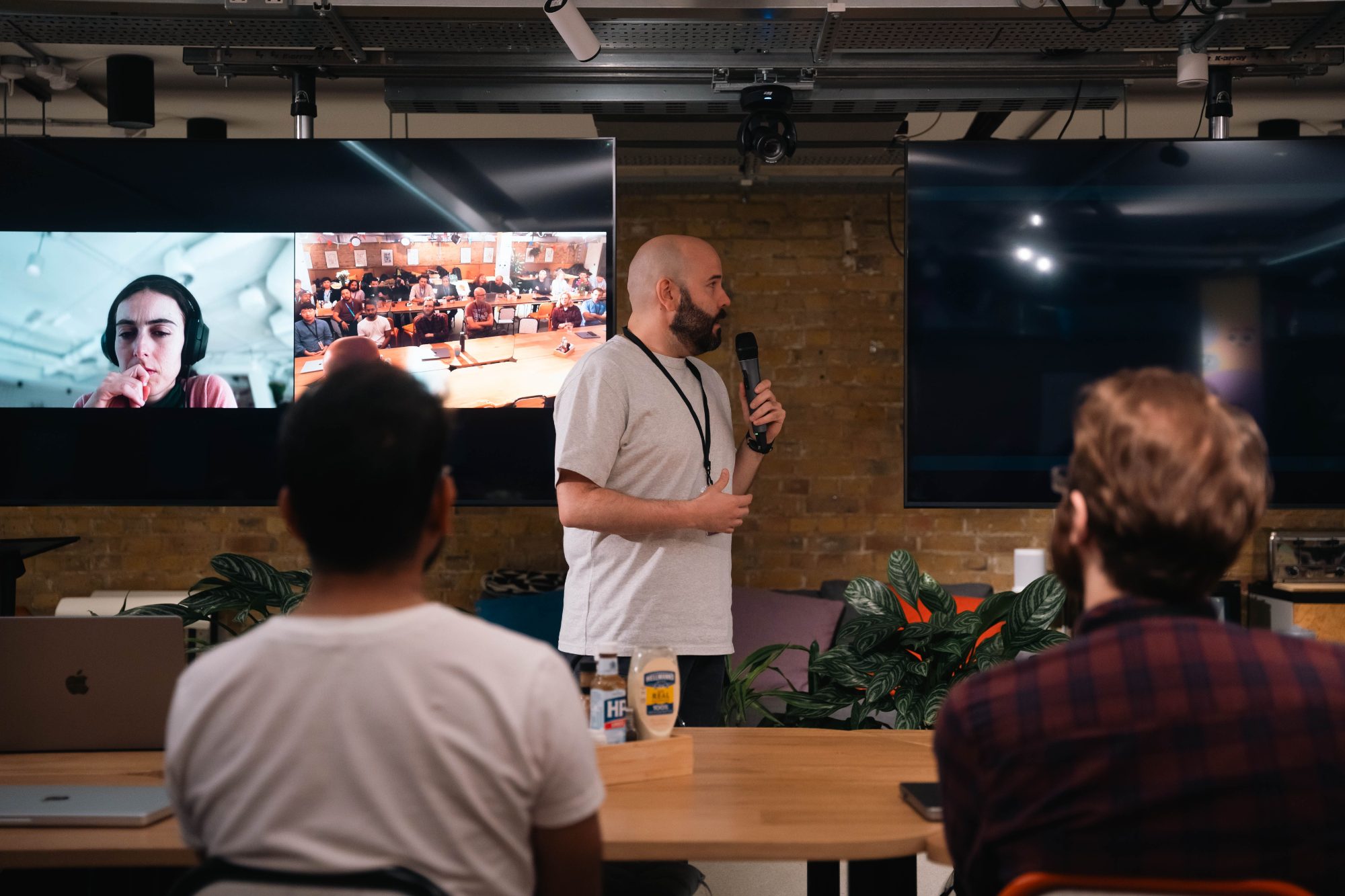
AI Tinkerers is a global community for people who build with AI. It is not a conventional conference, a passive lecture series, or a promotional networking event. It is a builder-oriented space designed for engineers, researchers, founders, and technical practitioners who are actively working with AI systems—people who write code, train models, design agents, deploy applications, and wrestle with the practical realities of turning ideas into working software. The community’s culture is shaped by what its members bring to the room: live demos, technical deep dives, architecture discussions, and honest accounts of what worked and what did not. The emphasis is on substance over spectacle, and on peer-to-peer exchange rather than one-way presentations.
That focus on practical work is what gives communities like AI Tinkerers their value. In a field moving as quickly as AI, no single person can keep up with every new technique, tool, or architectural pattern. Builders need spaces where they can see what others are shipping, ask questions that documentation rarely answers, and learn from mistakes that would otherwise be repeated in isolation. Genuine networking—the kind that leads to collaboration, feedback, and shared problem-solving—grows naturally when people are working on similar challenges and can speak the same technical language. For the broader AI ecosystem, these communities act as informal knowledge networks. They shorten the distance between experimentation and implementation, and they help ensure that practical experience is shared rather than siloed. AI Tinkerers has grown into a global community because that need is universal, and because builders everywhere want a room where they can talk honestly about the work.
Bringing AI Tinkerers to Afghanistan
AI Tinkerers Afghanistan exists to bring that same builder-first model to a local context where technical talent is abundant but access to international communities is often limited. Afghanistan has a growing number of developers, engineers, and technologists who are learning, building, and finding ways to work with modern tools despite significant logistical and infrastructural challenges. Many of them are already experimenting with AI, software engineering, automation, and related fields. What has been missing is not talent or motivation, but a consistent, technically focused space where that talent can meet, exchange ideas, and connect with the wider global ecosystem of AI builders. The gap is not about ability; it is about access—access to peers who understand the work, to informal knowledge networks, and to opportunities for collaboration that are often taken for granted in other parts of the world.
The establishment of AI Tinkerers Afghanistan is a direct response to that gap. As part of the global AI Tinkerers network, the chapter is intended to create a local environment where Afghan engineers, founders, researchers, and product builders can demonstrate their projects, discuss technical lessons, and learn from one another in a no-pitch, builder-first setting. The motivation behind the chapter is not to organize events for their own sake, but to connect Afghan builders with the broader global AI community and to give them a place where their work can be seen and discussed at a technical level. In a context where international conferences and informal networks can be difficult to reach, a local chapter that is plugged into a global community of builders represents a meaningful bridge. It is a way of saying that Afghan builders do not have to wait for perfect conditions to be part of the global conversation about applied AI.
Yonipeak and the AI Tinkerers Afghanistan Chapter
The support behind AI Tinkerers Afghanistan comes from Yonipeak, a team and organization that is helping to initiate the local chapter and contribute to the growth of the local AI builder ecosystem. Yonipeak’s team works across a range of technical areas, including AI, software engineering, cybersecurity, embedded systems, IoT, and robotics. That background is directly relevant to the chapter’s practical, builder-oriented approach. The community is not meant to be a theoretical discussion group; it is meant to be a place where people who work on real systems can share what they are building and learn from others who understand the trade-offs involved. Yonipeak’s involvement helps create the local infrastructure, connections, and opportunities needed for Afghan technical builders to learn, demonstrate projects, collaborate, and connect with the wider AI Tinkerers ecosystem.
It is important to be clear about the nature of that relationship. Yonipeak is a supporting force and an initiator of the chapter, not the owner of the community and not the only organization involved. AI Tinkerers Afghanistan is intended to be community-driven and open to builders beyond Yonipeak—engineers, researchers, founders, students, and practitioners from different backgrounds who want a technical space to share their work. The broader vision is to connect Yonipeak’s technical community with Afghan AI builders, researchers, engineers, founders, and international technology communities through the platform that AI Tinkerers provides. Yonipeak’s role is to help start the conversation and provide a foundation, but the community’s long-term strength will depend on the participation of many people and organizations who share its builder-first values. The focus remains on the community and its purpose: creating a practical, connected, and sustainable space for people who build with AI in Afghanistan.
The Beginning: Building a Local AI Community
AI Tinkerers Afghanistan is at the very beginning of its journey. The chapter’s inaugural meetup will be its first opportunity to bring local builders together under the AI Tinkerers banner, and the goal of that first gathering is to establish a practical, builder-first environment. The format will follow the global community’s model: demonstrations of working projects, technical discussions, knowledge sharing, and the chance to meet people who are actively working on AI. The aim is not to attract a massive audience or generate headlines, but to set the tone for what the community will be. It is about creating a room where people who are building with AI can find peers who understand the specific challenges of their work and can offer honest, technical feedback.
A strong community is not built in a single event. It is built gradually, through consistent participation and meaningful technical exchange. The early stage of AI Tinkerers Afghanistan is therefore about laying the groundwork: identifying local builders who are working on AI agents, generative AI, automation, computer vision, or other applied projects; creating a culture of openness where people feel comfortable sharing not just their successes but also the failures and dead ends that are part of any real engineering effort; and establishing a rhythm of regular meetups that people can rely on. The specific topics will be shaped by what local builders are actually working on, and the community will grow as more people contribute their time, projects, and questions. This is the beginning of a longer journey, not a conclusion. The measure of success in these early months will be whether the chapter becomes a place that builders want to return to—not because they have to, but because the conversations are useful and the people are worth knowing.
Why a Builder-First Community Matters
The value of a builder-first community in a context like Afghanistan goes beyond networking or professional development, though both of those are important. AI is developing at a pace that makes it difficult for any individual, no matter how dedicated, to keep up alone. The techniques that were state of the art six months ago are often superseded; the tools that seemed essential are replaced by better alternatives; the architectural patterns that worked in one context fail in another. In this environment, the ability to learn from peers who are grappling with similar problems is not just helpful—it is a practical necessity. A local AI Tinkerers chapter provides that peer learning infrastructure. It gives builders a regular opportunity to see what others are shipping, to ask questions about implementation details that documentation rarely covers, and to get feedback on their own work from people who understand the technical trade-offs involved.
The community also creates connections that extend beyond AI into adjacent areas. Many builders work at the intersection of AI and software engineering, automation, IoT, robotics, research, and startups. A conversation that starts with a demonstration of an AI agent might lead to a discussion about how to integrate it with embedded systems, how to automate a workflow for a small business, or how to turn it into the foundation of a new product. These cross-pollinations are where some of the most interesting work happens. For Afghan builders who may not have direct access to international networks, a local chapter that is part of a global community offers a way to plug into those conversations. It is a channel through which knowledge, opportunities, and collaborations can flow in both directions. The chapter is not claiming to solve every structural challenge that Afghan technologists face, but it is creating a space where talent and effort can meet with peers and ideas in a way that is grounded, practical, and oriented toward building real things.
Looking Ahead: The Future of AI Tinkerers Afghanistan
The future of AI Tinkerers Afghanistan, as a vision rather than a guarantee, is one of gradual growth and deepening roots. In the near term, the goal is to establish a regular cadence of meetups where local builders can demo their work, share technical lessons, and connect with one another. Over time, the chapter could expand to include workshops, code-along sessions, and online events that make participation possible for people who cannot attend in person. The global AI Tinkerers network provides resources, playbooks, and support for organizers, and the Afghanistan chapter can draw on that infrastructure while adapting it to local realities. There is also the possibility of stronger connections with other chapters in the region and beyond, creating opportunities for cross-chapter demos, collaborative projects, and knowledge exchange.
In the longer term, the vision is to create a sustainable environment where Afghan builders can showcase what they are building, learn from others, collaborate on projects, and connect with the wider global AI ecosystem. That means creating a culture of practical AI development that outlasts any individual organizer or event. The topics that the chapter will explore are the same ones that animate the global community: AI, generative AI, AI agents, automation, IoT, robotics, computer vision, research, and the applied work that turns these technologies into working systems. But the measure of success will not be the number of events held or the size of the audience. It will be whether the chapter becomes a place where builders feel that their work is seen, where they can find collaborators who share their interests, and where they can contribute to something larger than themselves. The goal is not simply to organize events, but to help build a lasting culture of practical AI development and collaboration in Afghanistan—one that connects local talent with global knowledge and gives Afghan builders a seat at the table in the ongoing conversation about how AI is built and used.
Emran Rahmani
Editor
Editor at Yonipeak